Ruby: The Undisputed King of Red Gemstones — Rarity, Color, Value & Timeless Appeal

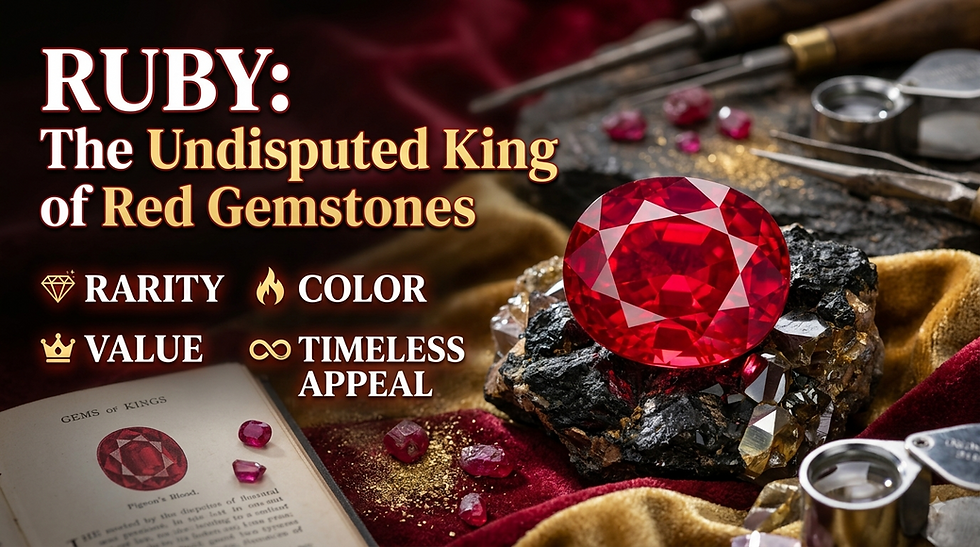
There’s something about a ruby that is hard to ignore. Its deep red color feels warm, bold, and full of character. Unlike gemstones that quietly complement an outfit, a beautiful ruby often becomes the piece everyone notices first.
For centuries, ruby has been associated with royalty, passion, power, and prosperity. Even today, it remains one of the most admired and sought-after colored gemstones in the world.
But what makes ruby so special? Is it simply the color, or is there more behind its reputation as the king of red gemstones? Let’s take a closer look.
What Makes Ruby So Special?
Ruby belongs to the corundum family of minerals, the same family that includes sapphire. In its pure form, corundum is colorless. Ruby gets its characteristic red color primarily from trace amounts of chromium.
What makes ruby particularly fascinating is the range of red it can display. Depending on the stone, you may see vibrant crimson, rich ruby red, or slightly purplish-red tones.
A fine ruby isn't just about being "red." The way that color looks within the gemstone—its intensity, saturation, transparency, and overall appearance—is what gives it personality.
Why Is Ruby So Rare?
Not every red corundum becomes a valuable ruby. Finding a natural ruby with an attractive color, good transparency, and desirable characteristics can be surprisingly difficult.
High-quality rubies, especially larger stones with exceptional color and clarity, can be extremely rare. This scarcity is one of the reasons fine rubies have remained so desirable among collectors and jewelry enthusiasts.
And there’s another important point: natural rubies often contain inclusions. These tiny internal characteristics can actually help gemologists identify and understand a stone. So, unlike diamonds, a ruby doesn't necessarily need to be flawless to be beautiful or valuable.
The Importance of Ruby's Color
When it comes to ruby, color is usually the star of the show.
The most desirable rubies generally have a strong, vivid red appearance with good saturation. A stone that looks dull, overly dark, or too pale may not have the same visual appeal.
You may also hear the term “pigeon blood” used in discussions about exceptional ruby color. It is traditionally associated with a vivid, highly saturated red. However, ruby quality isn't determined by a single phrase or label. The overall appearance and characteristics of the individual gemstone matter.
Simply put, the best ruby is one that catches your eye and holds it.
Ruby's Impressive Durability
Beauty is important, but jewelry also needs to stand up to everyday life.
Ruby has a Mohs hardness of 9, making it one of the hardest natural gemstones. Only diamond and a few other materials rank higher on the Mohs scale.
This excellent hardness makes ruby a practical choice for rings, earrings, pendants, and other jewelry that may be worn regularly. Of course, hardness doesn't mean indestructibility, so ruby jewelry should still be treated with care.
What Determines a Ruby's Value?
There isn't a single factor that determines what a ruby is worth. Several characteristics work together.
Color
A vivid, attractive red is generally one of the most important factors in determining ruby value.
Clarity
Natural rubies commonly contain inclusions. The type, size, location, and visibility of those inclusions can influence value and appearance.
Cut
A good cut helps the ruby display its color and brilliance beautifully. The goal isn't simply to maximize sparkle but to bring out the gemstone's best visual qualities.
Carat Weight
Larger, high-quality natural rubies can be exceptionally rare. As size increases, finding a ruby that also maintains desirable color and quality becomes more difficult.
Origin
The geographic origin of a ruby can sometimes influence its desirability and value, particularly when a stone comes from a historically renowned source. However, origin alone doesn't make a ruby valuable; the gemstone's actual quality remains essential.
Treatments
Many rubies available in the jewelry market have undergone treatments to improve their appearance. Buyers should always ask whether a ruby has been treated and request appropriate documentation for significant purchases.
Ruby vs. Other Red Gemstones
Ruby isn't the only gemstone that comes in red. Garnet, spinel, tourmaline, and other gems can display beautiful red shades.
So why does ruby stand apart?
The combination of rich color, durability, rarity, history, and symbolism gives ruby a unique position in the world of colored gemstones.
Red spinel, for example, can be remarkably beautiful and has sometimes been mistaken for ruby historically. Red garnet offers warm, attractive colors and can be an excellent jewelry choice. But fine natural ruby occupies a special place because exceptional examples are genuinely scarce.
It's not necessarily about one gemstone being "better" for everyone. It's about what makes ruby uniquely desirable.
The Timeless Appeal of Ruby Jewelry
Ruby has an amazing ability to look both traditional and modern.
A classic ruby-and-diamond ring can feel wonderfully elegant, while a simple ruby solitaire can look sleek and contemporary. Ruby also pairs beautifully with yellow gold, rose gold, white gold, and platinum.
That versatility is one reason ruby never seems to disappear from jewelry trends.
You can wear a ruby ring with an evening outfit, pair ruby earrings with everyday clothing, or choose a delicate ruby pendant for a subtle touch of color. The gemstone has enough personality to stand out without requiring an elaborate design.
Why Ruby Makes Such a Meaningful Gift
Ruby is often associated with love, passion, courage, strength, and prosperity. That symbolism makes it especially meaningful for birthdays, anniversaries, engagements, and other milestones.
A ruby doesn't feel like an ordinary gift. It carries a sense of occasion.
For someone born in July, ruby has the added significance of being the traditional July birthstone. But you don't need to be born in July to appreciate it. Many people choose ruby simply because they connect with its color, character, and symbolism.
How to Choose a Ruby You'll Love
When buying a ruby, don't focus only on size or price. Start by looking at the gemstone itself.
Ask yourself:
Does the red color immediately appeal to you?
Does the stone look lively and attractive under different lighting?
Are you comfortable with its level of clarity and inclusions?
Has the ruby been treated?
Is there a reputable gemological report for a significant purchase?
Does the setting protect the stone appropriately for how you plan to wear it?
Most importantly, buy from a trustworthy jeweler who is transparent about the ruby's characteristics.
The King of Red Gemstones
Ruby has earned its reputation over centuries, but its appeal isn't simply about history or luxury. It's the combination of color, rarity, durability, symbolism, and personality that makes this gemstone so captivating.
A great ruby doesn't need to shout. Its color does the talking.
Whether set in a classic ring, paired with diamonds, or worn as a simple everyday piece, ruby continues to bring a sense of confidence and timeless elegance to jewelry.
That's why, among the many beautiful red gemstones available today, ruby continues to wear its crown as the undisputed king of red gemstones.
FAQs
1. What makes ruby different from other red gemstones?Ruby stands out for its combination of vivid red color, excellent durability, rarity, and centuries of history. While gemstones like red spinel and garnet can be beautiful, fine-quality natural ruby is particularly prized for its rich color and scarcity.
2. Is a darker red ruby always more valuable?Not necessarily. Ruby value depends on the overall quality of its color, including hue, saturation, and tone. A vivid, lively red with strong saturation is generally more desirable than a ruby that simply appears very dark.
3. Why do natural rubies often have inclusions?Inclusions are common in natural rubies and are part of their natural formation story. Some inclusions can even help gemologists distinguish natural rubies from synthetic or treated stones. What matters is whether the inclusions affect the gemstone's beauty or durability.
4. What should I check before buying a ruby?Look beyond size. Pay attention to the ruby's color, clarity, cut, treatment status, origin information, and certification. For a valuable ruby, a reliable gemological report and a trustworthy jeweler can make a significant difference.


Comments