Natural vs Synthetic Ruby: How to Tell the Difference Between Real and Fake Ruby

Updated: Jul 4

Rubies have captivated collectors and jewellery lovers for centuries with their fiery red colour and remarkable durability. As one of the world's most valuable coloured gemstones, natural rubies are highly sought after and unfortunately, they're also one of the most imitated gemstones on the market.
If you're planning to invest in a ruby, understanding the difference between a natural ruby, a synthetic ruby, and an imitation (fake) ruby is essential. This guide explains how each type differs, what to look for when buying, and how you can shop with confidence.
Whether you're purchasing your first gemstone or adding to an existing collection, choosing a trusted supplier makes all the difference. At Gemstones WA, we specialise in ethically sourced, genuine gemstones and provide expert guidance to help you select the perfect ruby.
What Is a Natural Ruby?
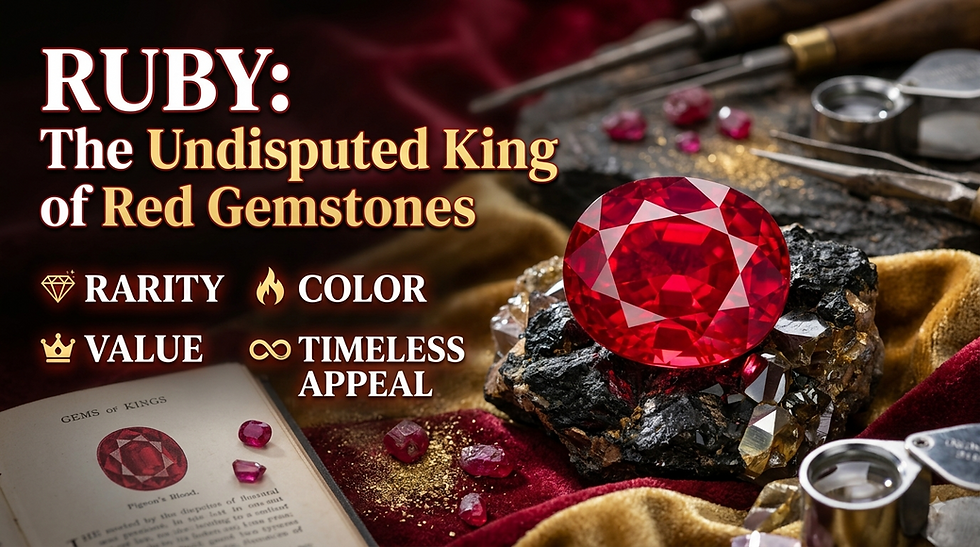
A natural ruby is a gemstone formed deep within the Earth's crust over millions of years. Rubies belong to the mineral family called corundum, with their iconic red colour created by trace amounts of chromium. The finest natural rubies are exceptionally rare, making them among the most valuable coloured gemstones in the world.
Every natural ruby contains unique internal characteristics known as inclusions. These tiny mineral crystals, silk-like needles, or natural growth patterns are formed during the stone's creation and act as nature's fingerprint.
For example, our Natural Ruby 1.65 Ct Unheated Deep Red Gemstone beautifully showcases the rich colour and natural inclusions that make genuine unheated rubies so highly valued by collectors and jewellery enthusiasts.
Natural rubies are prized because of their:
Exceptional rarity
Unique natural inclusions
Long-term value
Individual character and beauty
Strong collector and investment appeal
What Is a Synthetic Ruby?
A synthetic ruby, also called a lab-grown ruby, has the same chemical composition, crystal structure, and hardness as a natural ruby. The difference is simply its origin it is created in a laboratory rather than formed naturally underground.
Because laboratory conditions can be carefully controlled, synthetic rubies often appear:
Extremely clean
Highly transparent
Uniform in colour
Nearly free of natural inclusions
Synthetic rubies are genuine ruby material, but they are significantly less valuable than natural stones because they can be produced in large quantities.
What Is a Fake Ruby?
The term fake ruby generally refers to materials that imitate the appearance of ruby but are not actually ruby.
Common ruby imitations include:
Red glass
Cubic zirconia (CZ)
Red spinel
Garnet
Composite or glass-filled stones sold without proper disclosure
These materials may resemble ruby at first glance, but they differ in hardness, durability, composition, and value. Misrepresentation occurs when such stones are marketed as natural rubies.
How to Tell if a Ruby Is Real
While professional gemological testing is the only definitive method, several visual clues can help distinguish natural rubies from synthetic or imitation stones.
1. Look for Natural Inclusions
One of the strongest indicators of authenticity is the presence of natural inclusions.
Natural rubies commonly display:
Fine silk-like rutile needles
Small crystal inclusions
Colour zoning
Natural growth patterns
By comparison, synthetic rubies often show curved growth lines or appear exceptionally clean under magnification.
2. Be Cautious of Stones That Look Too Perfect
Perfect clarity is surprisingly uncommon in natural rubies.
If a ruby appears:
Completely flawless
Uniform in every direction
Brilliantly clear
Exceptionally inexpensive
…it deserves closer examination.
Many laboratory-grown stones are intentionally manufactured to eliminate visible imperfections.
3. Check the Colour
Natural rubies display rich, vibrant reds that often include subtle variations throughout the stone.
Colour may range from:
Deep crimson
Slightly purplish red
Rich vivid red
Pinkish red in lighter stones
Synthetic and imitation stones sometimes appear unnaturally bright or overly uniform in colour.
4. Consider the Price
One of the biggest warning signs is an unrealistically low price.
High-quality natural rubies are rare.
If someone offers a large, clear ruby for only a fraction of the expected market value, it's worth asking:
Is it synthetic?
Has it been heavily treated?
Is it actually another gemstone?
If the answer isn't clear, request documentation before purchasing.
5. Request a Gemstone Certificate
For valuable purchases, always ask for certification from a recognised gemological laboratory.
A professional certificate can confirm:
Natural or synthetic origin
Treatments
Weight
Species
Variety
Certification provides confidence that you're purchasing exactly what is being represented.
What About Heat-Treated Rubies?
Many buyers are surprised to learn that heat treatment is common in the ruby trade.
Heating improves:
Colour
Clarity
Overall appearance
Importantly, a heat-treated ruby is still considered a natural ruby because it formed naturally in the earth before treatment. The treatment simply enhances its appearance.
Responsible gemstone sellers clearly disclose any treatments.
Are Synthetic Rubies Worth Buying?
Absolutely provided they are sold honestly.
Synthetic rubies offer:
Excellent durability
Beautiful appearance
Affordable pricing
Ethical production
Ideal jewellery options
However, they should never be sold as natural gemstones.
Transparency is what matters most.
Buying Tips for Genuine Rubies
Before purchasing any ruby, keep these simple guidelines in mind:
Buy from a reputable gemstone specialist.
Ask whether the ruby is natural, synthetic, or treated.
Request certification for higher-value stones.
Don't rely solely on photographs.
Compare colour, clarity, and price carefully.
Avoid deals that seem too good to be true.
Why Buy Rubies from Gemstones WA?
Choosing a trusted gemstone supplier gives you confidence in your purchase.
At Gemstones WA, we carefully source quality gemstones and provide clear information about each stone's origin and characteristics. Whether you're searching for a ruby for jewellery, collecting, or investment, our goal is to help you make an informed decision.
Browse our carefully selected collection of natural ruby gemstones to find stones that combine exceptional colour, beauty, and authenticity.
Final Thoughts
Natural rubies, synthetic rubies, and imitation stones may look similar at first glance, but they differ significantly in origin, rarity, and value.
A natural ruby tells a geological story spanning millions of years, complete with unique inclusions and individual character. Synthetic rubies offer an attractive and affordable alternative, while imitation stones simply mimic ruby's appearance without sharing its composition.
Understanding these differences allows you to shop confidently and choose the gemstone that best suits your budget, purpose, and personal style.
Whether you're looking for an heirloom quality gemstone or your first ruby purchase, selecting a trusted supplier ensures you're getting exactly what you expect beautiful, genuine gemstones backed by expert knowledge.
Frequently Asked Questions
1. How can I tell if a ruby is natural or synthetic?
The most reliable way to determine whether a ruby is natural or synthetic is through a certified gemological laboratory. However, natural rubies typically contain unique inclusions, colour zoning, and growth patterns formed over millions of years, while synthetic rubies often appear cleaner and may display curved growth lines under magnification. Always ask for a gemstone certificate when purchasing a valuable ruby.
2. Are synthetic rubies real rubies?
Yes. Synthetic rubies are real rubies because they have the same chemical composition, crystal structure, and hardness as natural rubies. The key difference is that synthetic rubies are created in a laboratory, whereas natural rubies are formed naturally within the Earth. Because they are manufactured, synthetic rubies are generally much more affordable than natural ones.
3. Are heat-treated rubies considered natural?
Yes. Heat treatment is a common and widely accepted practice in the gemstone industry to enhance a ruby's colour and clarity. Since the gemstone was originally formed in nature, a heat-treated ruby is still classified as a natural ruby. Reputable gemstone sellers should always disclose any treatments applied to a stone.
4. Why are natural rubies more expensive than synthetic rubies?
Natural rubies are significantly rarer because they take millions of years to form and high-quality specimens are uncommon. Their rarity, unique natural characteristics, and strong demand contribute to their higher value. Synthetic rubies can be produced in laboratories in large quantities, making them much more affordable.
5. Where can I buy genuine natural rubies in Australia?
When buying a ruby, choose a reputable gemstone dealer that clearly identifies whether a stone is natural, synthetic, or treated. Look for detailed product descriptions, certification for higher-value gemstones, and transparent sourcing information. Shopping with trusted specialists helps ensure you're purchasing an authentic ruby with confidence.


Comments