Ruby Characteristics Explained: Meaning, Uses, Value & Fun Facts


Rubies have fascinated people for centuries with their deep red color, rarity, and timeless beauty. From royal jewelry collections to modern engagement rings, rubies continue to be one of the most admired gemstones in the world. Understanding ruby characteristics can help buyers, collectors, and gemstone lovers appreciate why this gem has remained so valuable across generations.
Whether you are curious about ruby symbolism, wondering “is a ruby a gem,” or comparing rubies with other stones like Blue Sapphires and Diamonds, this guide covers everything you need to know.
What Is Ruby?
A ruby is a precious gemstone belonging to the corundum mineral family. The vibrant red color comes from traces of chromium within the stone. Rubies are admired for their brilliance, durability, and rarity, making them one of the most sought-after gemstones in fine jewelry.
Many people ask, “Is ruby a precious stone?” The answer is yes. Rubies are considered one of the four traditional precious natural gemstones alongside Diamonds, sapphires, and emeralds. Their rarity and strong demand contribute to their high value in the gemstone market.
Ruby Characteristics That Make Rubies Special
Understanding ruby characteristics helps explain why these gemstones are treasured worldwide.
1. Rich Red Color
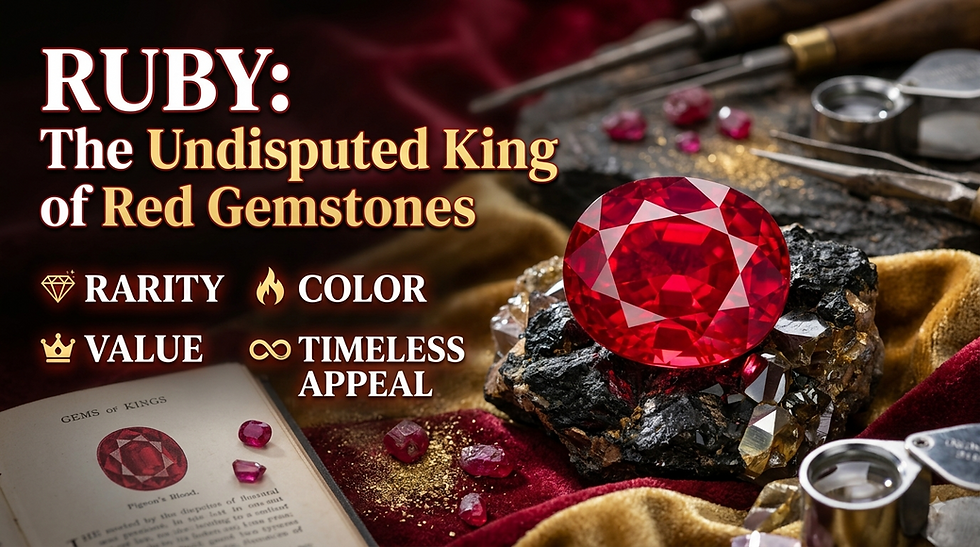
The most recognizable feature of a ruby is its intense red color. High-quality rubies often display a vivid red shade sometimes referred to as “pigeon blood red.” The richness and consistency of color play a major role in determining value.
2. Exceptional Hardness
Rubies score 9 on the Mohs hardness scale, making them one of the hardest natural gemstones after Diamonds. Their durability makes them suitable for everyday jewelry such as rings, bracelets, and pendants.
3. Natural Brilliance
A well-cut ruby reflects light beautifully, creating an eye-catching sparkle. While Diamonds are famous for brilliance, ruby gemstones offer a unique glow and depth of color that many gemstone enthusiasts prefer.
4. Rare Formation
Natural rubies are formed under intense heat and pressure over millions of years. Fine-quality rubies with strong color and minimal inclusions are extremely rare, which increases their value.
5. Symbolic Meaning
Rubies are often associated with passion, courage, love, and prosperity. Throughout history, kings and warriors believed rubies offered protection and strength.
Is a Ruby a Gem?
Yes, a ruby is a gem and one of the most valuable gemstones in the world. Gemstones are minerals or organic materials that are cut and polished for use in jewelry and decoration. Rubies meet all the qualities of a premium gemstone because of their beauty, durability, and rarity.
Today, rubies are widely used in luxury jewelry collections, often paired with Diamonds or even colorful stones like Padparadscha sapphires for unique designs.
Is Ruby a Precious Stone?
People frequently ask, “Is ruby a precious stone?” Rubies are officially classified as precious stones because of their rarity, historical importance, and lasting value.
The four traditional precious stones are:
Rubies
Diamonds
Emeralds
Sapphires
Other gemstones are generally categorized as semi-precious stones. However, some rare sapphires, including Padparadscha sapphires, can also be extremely valuable.
What Are Rubies Used For?
If you are wondering what rubies are used for, the answer goes beyond jewelry.
Fine Jewelry
Rubies are commonly used in:
Engagement rings
Earrings
Necklaces
Bracelets
Luxury watches
Their bold red color makes them a standout centerpiece in both modern and vintage jewelry styles.
Collectible Gemstones
High-quality natural Rubies are often purchased by collectors and investors because rare gemstones can increase in value over time.
Symbolic Gifts
Rubies are traditionally associated with love and passion, making them popular anniversary and birthday gifts.
Industrial Uses
Synthetic rubies are sometimes used in watchmaking, lasers, and scientific instruments because of their hardness and optical properties.
Synthetic Ruby Cost and Value
Modern technology allows scientists to create lab-grown rubies that look very similar to natural stones. Many buyers search for information about the cost of synthetic ruby when comparing gemstone options.
Synthetic rubies are usually much more affordable than natural rubies because they can be produced in controlled environments. The cost depends on:
Size
Color quality
Clarity
Cut
While synthetic rubies can still be beautiful, natural rubies generally hold greater long-term value due to their rarity.
Rubies vs Blue Sapphires and Diamonds
Rubies are often compared with Blue Sapphires and Diamonds because all three are popular luxury gemstones.
Rubies vs Blue Sapphires
Both gemstones belong to the corundum family. The main difference is color:
Rubies are red
Blue Sapphires are blue
Blue Sapphires are admired for their elegant appearance, while rubies are known for their passionate and vibrant look.
Rubies vs Diamonds
Diamonds are valued for brilliance and clarity, while rubies are prized for rich color and rarity. Some rare rubies can actually be more expensive per carat than Diamonds.
Rubies vs Padparadscha Sapphires
Padparadscha sapphires are famous for their rare pinkish-orange color. While they offer a softer appearance, rubies stand out for their bold red intensity and classic appeal.
Fun Facts About Rubies
Here are some interesting and fun facts about rubies that gemstone lovers enjoy:
The word “ruby” comes from the Latin word ruber, meaning red.
Ancient cultures believed rubies contained the power of life.
Rubies are the birthstone for July.
Some rubies glow under ultraviolet light because of chromium content.
Large natural rubies are often rarer than Diamonds.
Rubies have been treasured by royalty for centuries.
These fun facts about rubies help explain why they remain one of the most admired gemstones in the world.
How to Choose a Quality Ruby
When shopping for rubies, consider the following factors:
Color
Look for vibrant, evenly distributed red color.
Clarity
Natural inclusions are common, but fewer visible flaws usually increase value.
Cut
A good cut improves brilliance and overall beauty.
Carat Weight
Larger rubies are rarer and often more valuable.
Certification
Always purchase certified gemstones from trusted sellers to ensure authenticity.
Final Thoughts
Learning about ruby characteristics helps you understand why these gemstones continue to hold timeless appeal. Their rich red color, durability, rarity, and symbolism make rubies a favorite choice for jewelry collectors and gemstone enthusiasts alike.
Whether you are comparing Rubies with Blue Sapphires, Diamonds, or Padparadscha sapphires, rubies offer a unique combination of elegance and lasting value. From luxury jewelry to meaningful gifts, rubies remain one of the world’s most treasured precious stones.
FAQs
Is a ruby a gem or a mineral?
A ruby is both a mineral and a gemstone. It is a red variety of the mineral corundum that is cut and polished for jewelry use.
Is ruby a precious stone?
Yes, ruby is classified as a precious stone along with diamonds, emeralds, and sapphires.
What are rubies used for besides jewelry?
Rubies are used in watches, lasers, scientific instruments, and collectible gemstone investments.
What affects the cost of synthetic ruby?
Synthetic ruby cost depends on size, quality, color, and manufacturing method. They are generally more affordable than natural rubies.
Are rubies rarer than diamonds?
High-quality natural rubies can be rarer than Diamonds, especially large stones with vivid red color.
What makes Ruby's characteristics unique?
Ruby characteristics such as intense red color, hardness, rarity, and symbolism make them one of the most valuable gemstones in the world.


Comments